

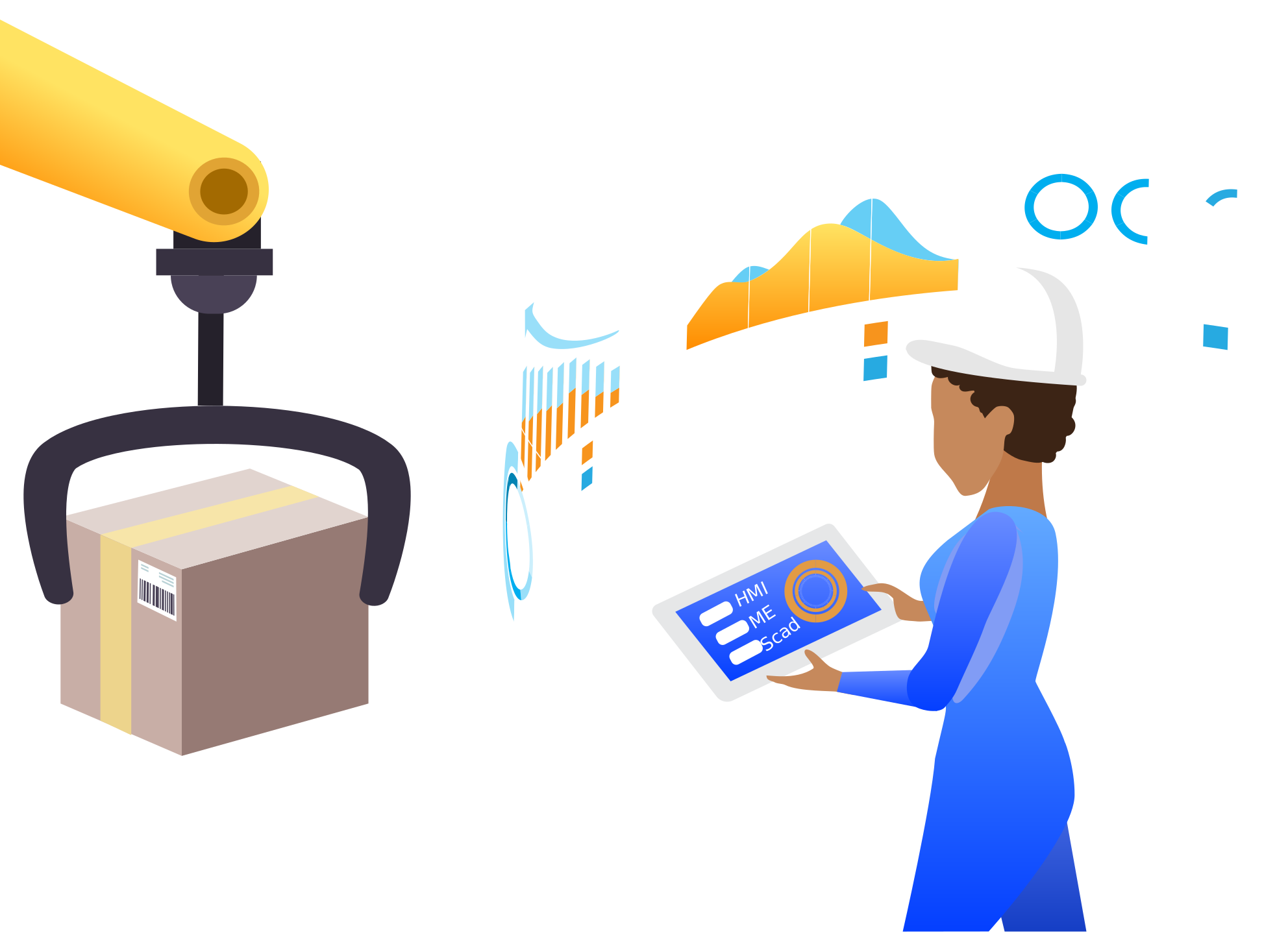



Digital Manufacturing - View, Monitor & Analyze your Operations
Digital Manufacturing enables manufacturers to integrate and analyze large volumes of operational data from plant-floor and enterprise systems, supporting real-time and historical insight into production performance and decision-making across the organization.
What We Fixes
Manufacturing data is often scattered across complex supply chains, multiple facilities, and disconnected systems, making it difficult to gain clear operational visibility.
Manufacturing Intelligence (MI) brings together data from manufacturing and enterprise systems into a single, unified analytics platform that supports smarter decision-making.
Unlike traditional Business Intelligence solutions that focus mainly on high-level corporate KPIs, MI is designed to provide insight into real-time factory-floor performance and productivity.
Manufacturing Intelligence tracks and analyzes the efficiency of both equipment and personnel, helping manufacturers better understand operational performance at every level.
Many manufacturers struggle to identify and respond to production issues quickly enough to minimize downtime and inefficiencies.
MI delivers real-time monitoring, reporting, and analytics that help detect issues early and enable faster corrective action.
In addition, manufacturers often lack the historical visibility needed to benchmark operations and compare production performance across sites.
MI provides access to historical production data, enabling enterprise-wide analysis, benchmarking, and continuous improvement initiatives.
Comprehensive Operational Insights with Digital Manufacturing
Airspeed Engineering’s Manufacturing Intelligence (MI) solutions connect plant-floor automation with enterprise-level information systems, giving manufacturers greater visibility, improved efficiency, and more informed decision-making. Our experienced MI engineers combine deep manufacturing expertise with advanced software development capabilities to design and implement customized solutions that support operational excellence.
We specialize in integrating data from a wide range of manufacturing and business systems, creating scalable reporting platforms, and enabling seamless data communication across the organization. From plantwide monitoring systems and enterprise dashboards to real-time mobile applications, we deliver the tools needed to track, analyze, and optimize production performance.
Our MI team has extensive experience with historian systems, data collection, analytics, and custom reporting solutions. Leveraging technologies such as C#, Python, JavaScript, and T-SQL, along with development environments including Visual Studio, SQL Management Studio, and Azure DevOps, we build modern, reliable systems that provide continuous access to critical operational data.
- Data Infrastructure and Integration
- Software integrations and API development
- Database administration and Historian configuration
- PLC to software interfacing and FWSs
- Containerized software services
- Software delivery with DevOps best practices
- Platform upgrades and migrations
- Production Visibility and Reporting
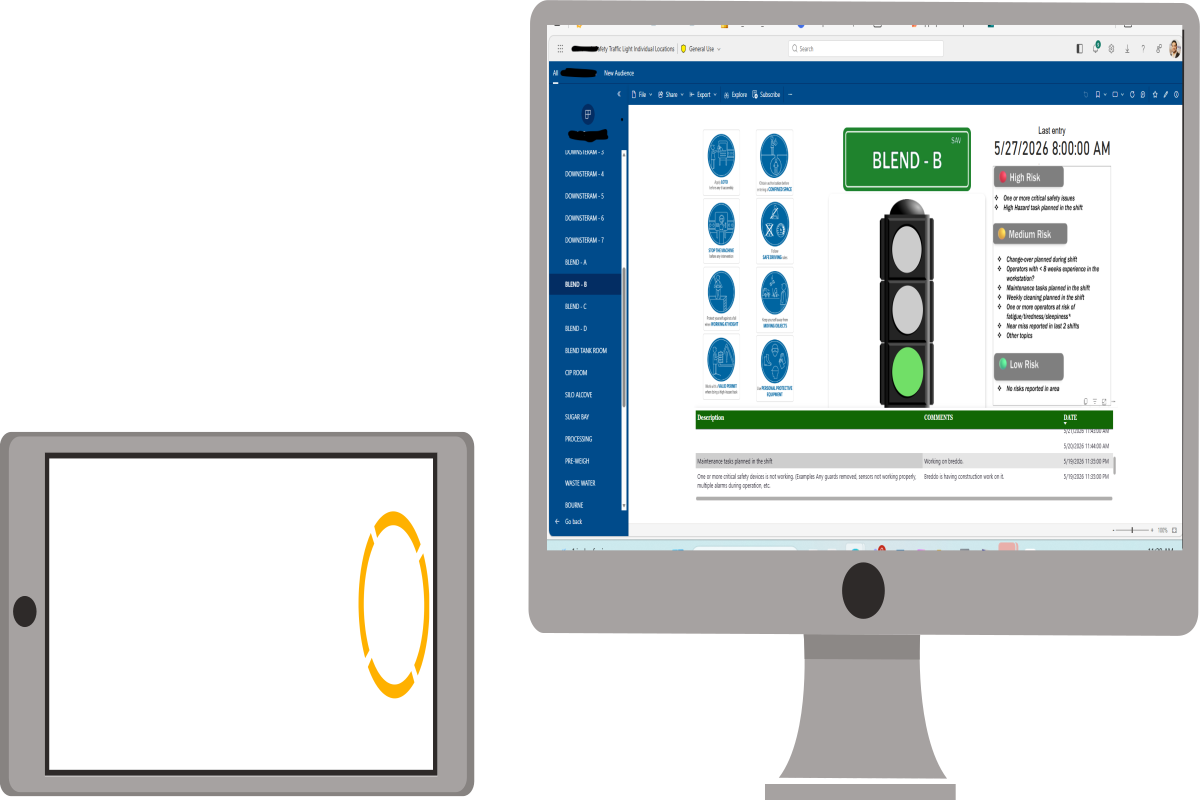
- Real-time dashboards (Power-Bi/KPIs)
- KPI tracking (OEE, throughput, downtime, etc.)
- Historian integration – Aveva Historian
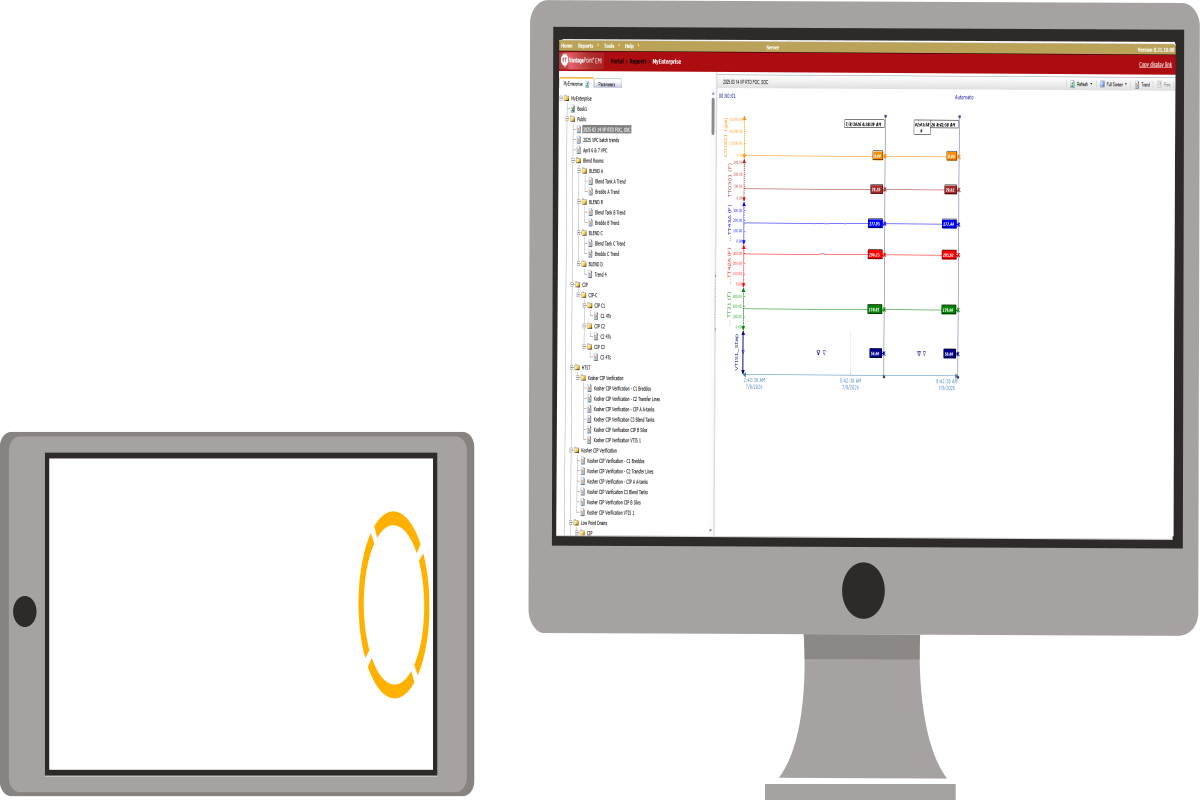
- Reporting and trend analysis
- CIP (Clean-in-place) data collection and analysis
- Enterprise data reporting
- Manufacturing Execution Systems (MES)
- MES implementation
- Enhanced MES data visualization
- Custom interfaces for batch and production management
Benefits of Manufacturing Intelligence
Manufacturing Intelligence gives you real-time visibility into your operations, helping you make faster, smarter decisions. By turning raw production data into clear insights, you can:
- Reduce downtime with real-time alerts and performance tracking
- Improve efficiency by identifying bottlenecks and waste
- Ensure quality through data-driven monitoring and reporting
- Increase traceability with centralized, accessible production data
- Drive continuous improvement across your entire operation
Data Collection and Reporting
- PLC and server-based batching solutions
- Recipe management, storage, and version control
- Batch history logging and recording
- Flexibility to add functionality
- ERP integration for inventory accuracy
- Production scheduling
- Full data collection and reporting
- Materials traceability
- Utilities optimization
Airspeed defines and configures data collection and reporting systems using proven software solutions, enabling us to support everything from automated shift reports and log sheets to operational dashboards and Power BI KPIs. We design reports and dashboards that present data in the right context for each audience—from management to maintenance and research and development.
Custom Application Development
Our team develops a wide range of applications, from custom hardware interfaces to complete manufacturing operating systems. These solutions can integrate multiple operator systems with central databases and application servers. We work closely with you to understand your needs and create applications that improve the way your operations run.
FAQs
How does SCADA screen design impact plant productivity?
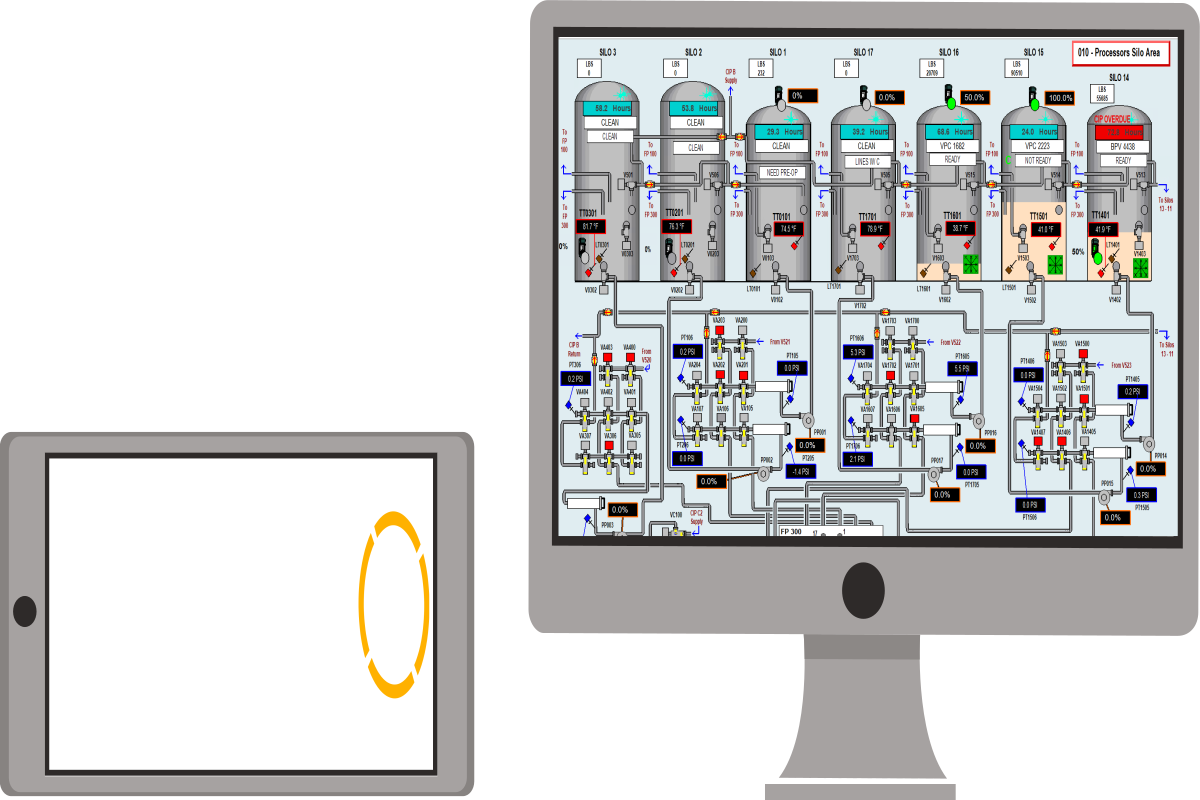
Clunky, inefficient, and confusing SCADA screens can frustrate operators, impairing their decision-making speed and accuracy. Seconds spent looking for a button or valve on a crowded screen can quickly add up to hours of lost productivity. Download our white paper on SCADA design to explore seven user-centric design principles that can prevent these problems.
What are the most essential MES tools for plant productivity?
We recommend implementing the following MES tools:
- Overall Equipment Effectiveness (OEE)
- Downtime Tracking
- Data Entry Automation
- Track and Trace
- Asset Management
- Predictive Maintenance
- Production Scheduling
- Recipe Management
- Statistical Process Control
For a deep dive into each of these tools and how they can improve performance, download our white paper, 9 MES Tools Every Plant Manager Needs.
How can I reduce risks during a control system migration?
To reduce risk, be sure to decide on your approach (hardware-only or hardware and software), prioritize the upgrades that are most important, and create a comprehensive upgrade plan that includes risk identification and mitigation strategies.
For a deeper dive into risk mitigation, download our white paper, 5 Risk Mitigation Techniques for Control System Upgrades.
How can I ensure a successful MES implementation?
First, you’ll need to prepare for change and secure buy-in for the project. You’ll also need to create a process map, define the data you hope to get from your MES system, and schedule workshops throughout the implementation process to assess your progress.
What should I consider when selecting an OEE solution?
The most important initial consideration is whether you need a custom OEE software solution or a point solution. Custom OEE software solutions are developed using a generalized software platform, while point solutions are designed for a single application.
What does it mean to digitize my factory?
From better reliability to easier scalability and integration, there are numerous reasons to incorporate cloud technology into your plant floor operations. Contact us to explore common benefits and concerns, as well as real-world use cases connecting to the cloud.
What are the first steps to becoming a fully digital factory?
First, you’ll need to prepare your employees for change and establish a project management plan. Then, once you’ve selected your MES software, you can begin the transition to digital one process at a time. For a deeper dive into each step, contact us.
How can I maximize the potential of my plant’s data?
Unified Namespaces (UNS) and Unified Analytics Frameworks (UAF) can help establish seamless data communication between disparate systems and unlock the true potential of your data. Contact us to learn more.
Manufacturing Intelligence Tech Stack
We use modern toolset across core areas of Digital Manufacturing to ensure performance, visibility, and uptime. Here’s a snapshot of the platforms we integrate across your environment.
Aveva
SAP

Autocad Electrical

Nvent Hoffman

UL 508A

UL 698A

CSIA
SAP

Wonderware System Integrator

Factory Talk

Claroty

Rockwell System Integrator

Inductive Automation

Siemens Automation

Inductive Automation

Rockwell Automation

Canary

Flow Software

See

Kanoa

Sepasoft
Fortinet
Cisco Umbrella
Check Point
Mimecast
Proofpoint
Cloudflare
Burp Suite
OWASP ZAP
Nessus
Metasploit
Qualys
Invicti
N-able
Atera
NinjaOne
ConnectWise Automate
Kaseya VSA
Tenable Nessus / Tenable.io
Qualys VMDR
Rapid7 InsightVM
Domain Centric Manufacturing Intelligence For Industry Specific Needs
Maximize Your Digital Plant.
Click to talk to our team about improving your data management, visibility and plant efficiency.